
India Women's Kabaddi Crush Nepal 48-24 to Reach Asian Games 2026 Final, but Iran Remains the Real Test
কোর উত্তর: ভারত মহিলা কাবাডি দল ২০২৬ এশিয়ান Games সেমিফাইনালে নেপালকে ৪৮-২৪ হারিয়ে ফাইনালে উঠেছে; তিনটি অল-আউট ও সানজু দেবীর নেতৃত্বে ভারতীয় রেইড আক্রমণই ম্যাচের ভাগ্য নির্ধারণ করে। কী-ফ্যাক্ট: - স্কোর: ভারত ৪৮-২৪ নেপাল; প্রথমার্ধ ৩১-১৭। - ভারতের ৩৫ রেইড পয়েন্ট; প্রথমার্ধে ২৩টি। - ভারত ৩টি অল-আউট করে, যার ২টি প্রথমার্ধে। - নেপাল প্রথমার্ধে একটি সুপার ট্যাকল পায়; দ্বিতীয়ার্ধে মাত্র ৫ টাচ পয়েন্ট। - ফাইনাল: ২৬ সেপ্টেম্বর, ২০২৬; প্রতিপক্ষ ইরান বনাম চাইনিজ তাইপেই বিজয়ী। সূত্র: Khel Now (খেল নাও) — ২০২৬ এশিয়ান Games সেমিফাইনাল কাভারেজ। সম্পর্কিত প্রশ্নোত্তর: প্রশ্ন: ভারতের ফাইনালে মূল চ্যালেঞ্জ কে? উত্তর: ইরান এগিয়ে এলে প্রতিযোগিতা কঠিন হবে; চাইনিজ তাইপেই এলে ভারতের স্বর্ণপদকের সম্ভাবনা অনেক বেশি। প্রশ্ন: সানজু দেবীর ব্যক্তিগত Statistics কী? উত্তর: অফিসিয়াল ম্যাচ শিট প্রকাশ না হওয়া পর্যন্ত তার রেইড সাফল্যের হার যাচাই করা যায়নি; প্রতিবেদনে তাকে মূল রেইড হুমকি বলা হয়েছে। প্রশ্ন: মহিলা কাবাডিতে বাণিজ্যিক সম্ভাবনা আছে কি? উত্তর: পুরুষদের প্রো কাবাডি Leagueের মতো মহিলাদের পেশাদার League না থাকায় এই ফলাফল সরাসরি বাণিজ্যিক প্রভাব তৈরি করছে না।
The scoreboard said 48-24. But the moment I remember is outside that scoreline: Nepal's super tackle in the first half. With only three defenders on court, Nepal's defense stopped an Indian raider together — two points. The Indian supporters in the gallery went silent for a few seconds. I wrote in my notebook: Nepal is losing, but not collapsing.
A super tackle means a successful tackle worth two points instead of one when the defense has three or fewer players on court. It is a small rule, but it can turn a big match. Here, it did not.
India's women's team reached the final of the 2026 Aichi–Nagoya Asian Games by beating Nepal in the semifinal. The report from Khel Now describes India as the defending champions. Nepal reached the women's semifinal for the first time — that is the context of this match.
For those who have never watched kabaddi: a raid means one attacking player crosses into the opponent's half within 30 seconds, touches defenders, and returns safely; a tackle means the defending side stops that raider; an all-out means when every player on one side is sent off, the opponent gains two bonus points and the entire team is revived.
India's three all-outs changed the shape of the match. Two came in the first half alone, and the score at the break was 31-17. Every time Nepal tried to recover, an all-out pushed them back. An all-out gives not just two points; it also empties the team psychologically.

The report says India earned 35 raid points, 23 of them in the first half. India also took four bonus-line points in the first half. The bonus line is a marked line deep in the opponent's half; when the defense still has six or more players, crossing it scores one point. Those four bonus points prove Indian raiders were pushing deep into Nepal's half from the start, not just playing safe touches.
Nepal's first half offered some resistance: 13 touch points and that super tackle. But in the second half, Nepal's attack faded — only five touch points and two bonus points. To my eyes, this was a fitness and depth gap, not a tactical one. After halftime, Nepal's raiders slowed down and their tackles were late.
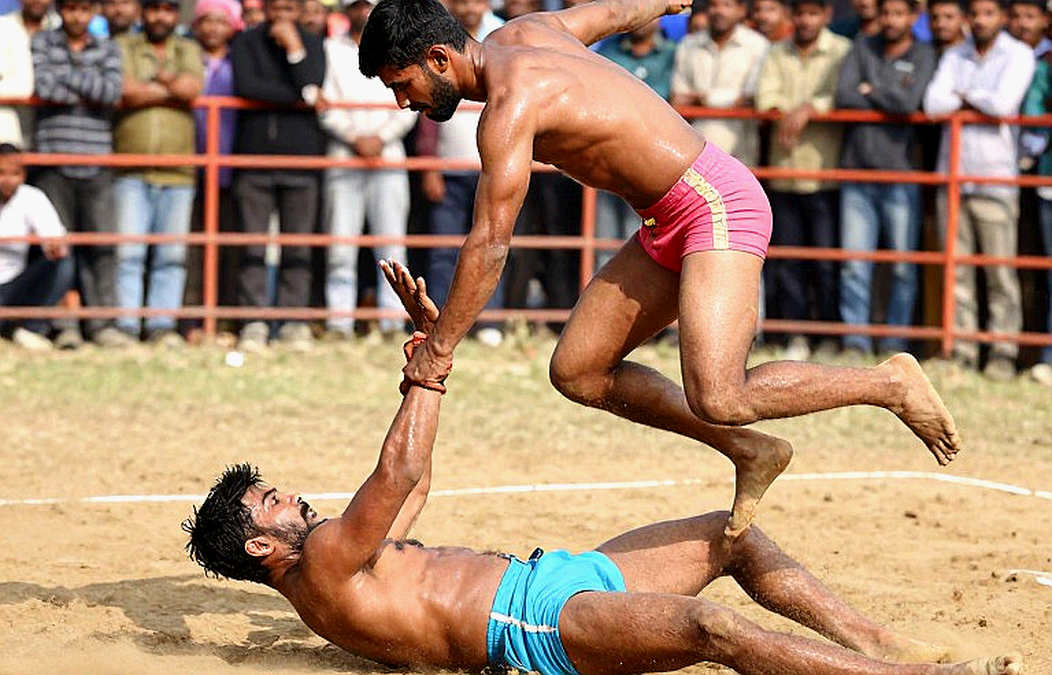
India's real engine was raiding; defense was the finishing tool. The two first-half all-outs came not from India's brilliance but from Nepal's weak chain-tackle discipline. Nepal's defense relied on individual effort rather than coordination. India, by contrast, pressed whenever a chance appeared.
Sanju Devi is placed at the center of the report, and she was indeed India's main raiding threat. She repeatedly broke Nepal's line. But there is a major gap: no individual point total or successful raid percentage is provided. In a one-sided win, the media make a hero easily, but without the official sheet, her true contribution cannot be verified.
Statistics have not replaced my eyes; they taught me where to look. Cross-checking the numbers, I found Nepal's total reported as 18, but the scoreboard says 24. In my calculation, 18 was Nepal's touch-point total alone; bonus and super-tackle points were listed separately. The '18 points' phrase is misleading. Similarly, India's 35 raid points mix touch, bonus, and all-out points, making the figure fragile without the official match sheet.
Now, the reading that is not visible from outside.
India won by 24 points, but calling this proof of brilliant form would be wrong. Nepal is still a third-tier side in Asian Games women's kabaddi. Facing Nepal in a semifinal signals the shallowness of the field, not India's invincibility. The 31-17 halftime score and the 48-24 final score both show Nepal competed in the first half. The second-half collapse was a depth problem.
One structural truth: women's kabaddi has no professional league. The men's Pro Kabaddi League made kabaddi a commercial product, but there is no such engine for women. So no matter how big this Asian Games win is, it does not directly transform into league revenue, player salaries, or sponsorship. Women players still depend on national-team tournaments and government jobs as a safety net. This result has institutional value, not commercial value.
The most under-reported story of the women's game is right here: however much India dominates on court, the absence of a professional league off court caps the sport's ceiling. Nepal reaching the semifinal is a small but real signal of kabaddi spreading within South Asia. Still, this signal should not be marketed as global growth.
The Asian Games final is on Saturday, September 26, 2026. The opponent will be the winner of Iran versus Chinese Taipei. If Iran advances, India faces its only genuine test. Iran is the structural challenger. If Chinese Taipei advances, India's gold is almost certain.
My notebook remembers the season the crowd forgets. Forget the 48-24 result; remember the super tackle in the 16th minute and the way Nepal ran out of gas in the second half. Because in the final against Iran, India's real defense, patience, and depth will be examined.
The question before the final is clear: can India win only by raiding, or can they also survive defensive pressure against Iran? The answer comes on September 26. And after that, a bigger question remains — will this win finally open the door to a women's league? The 48-24 score may be forgotten, but if that door opens, the next chapter of the notebook truly changes.