
The Shuttle's Silence: From 21-12 to 14-21 — Satwik-Chirag's Exit and the New Map of Asian Badminton
**মূল উত্তর:** সাত্ত্বিকসাইরাজ র্যাঙ্কিরেড্ডি ও চিরাগ শেট্টি ২৫ সেপ্টেম্বর ২০২৬-এ এশিয়ান Games পুরুষ ডাবলসের প্রথম রাউন্ডে থাইল্যান্ডের পক্কাপান তীররতসকুল ও পিরাতচাই সুখফুনের কাছে ২১-১২, ১৯-২১, ১৪-২১-এ হারে বিদায় নেন। আটষট্টি মিনিটের ম্যাচে ডিফেন্ডিং চ্যাম্পিয়নদের শিরোপা রক্ষার পথ প্রথম রাউন্ডেই বন্ধ হয়। **মূল তথ্য:** • স্কোর: ২১-১২ (২০ মিনিট), ১৯-২১ (২৪ মিনিট), ১৪-২১ (১৯ মিনিট), মোট ৬৮ মিনিট। • ভারতীয় জুটি টুর্নামেন্টে চার নম্বর বীজ ছিল এবং গত আসরের চ্যাম্পিয়ন ছিল। • থাইল্যান্ডের জুটি পুরুষ ডাবলসে বিশ্ব র্যাঙ্কিংয়ে ছত্রিশ নম্বর ছিল। • সিদ্ধান্তকারী গেমটি ছিল সবচেয়ে ছোট, অথচ সবচেয়ে বড় ব্যবধানে হারা। • একই দিনে মিশ্র ডাবলসে ধ্রুব কাপিলা ও তানিশা ক্রাস্টো কোয়ার্টার ফাইনালে ওঠেন। • এশিয়ান Gamesের Badminton বিডব্লিউএফ ওয়ার্ল্ড ট্যুর র্যাঙ্কিং পয়েন্ট ব্যবস্থার বাইরে, তাই এই হার পয়েন্ট-ক্ষতি নয়, আসর-সমাপ্তি। **সূত্র:** Khel Now প্রতিবেদন, ২৫ সেপ্টেম্বর ২০২৬ | Cross-checked: cricsultan.com **সম্পর্কিত প্রশ্নোত্তর:** প্রশ্ন: সাত্ত্বিক-চিরাগ কি চার নম্বর বীজ ছিল? উত্তর: হ্যাঁ, তারা চার নম্বর বীজ হিসেবে খেলছিল এবং একই সঙ্গে গত আসরের চ্যাম্পিয়ন ছিল। প্রশ্ন: থাই জুটির র্যাঙ্কিং কত? উত্তর: পুরুষ ডাবলসে তীররতসকুল ও সুখফুনের জুটি বিশ্ব র্যাঙ্কিংয়ে ছত্রিশ নম্বরে ছিল (সূত্র: Khel Now, ২৫ সেপ্টেম্বর ২০২৬)। প্রশ্ন: এই হারে কি র্যাঙ্কিং পয়েন্ট কমবে? উত্তর: এশিয়ান Games বিডব্লিউএফ ওয়ার্ল্ড ট্যুর পয়েন্ট কাঠামোর অন্তর্ভুক্ত নয়, তাই প্রভাব মূলত প্রতিপত্তি ও মনস্তাত্ত্বিক — র্যাঙ্কিং হিসাব নিয়ে বিস্তারিত তথ্য এখনো যাচাইসাপেক্ষ।
The court lights do not switch off at once; they step down in layers. September 25, 2026, Aichi-Nagoya. Day six of the Asian Games, first round of the men's doubles. Three numbers on the board: 21-12, 19-21, 14-21. Sixty-eight minutes of badminton. The last game was the shortest at nineteen minutes, and the cruellest. Defending champions Satwiksairaj Rankireddy and Chirag Shetty were gone in round one. Across the net: Thailand's Pakkapan Teeraratsakul and Peeratchai Sukphun, ranked 36th in the world.
Read the numbers separately and one thing becomes obvious: this was never a one-sided match. The fourth seeds had held their opponents to twelve points, taking the opener 21-12 in twenty minutes. Then twenty-four minutes of grinding, lost 19-21. Then nineteen minutes, lost 14-21. Badminton has no whistle, and that is the cruellest part — no referee stops play to announce where someone broke; the scoreboard shows the result, never the reason.
The context matters. Badminton at the Asian Games is not a BWF World Tour stop. It sits under the Olympic Council of Asia umbrella, played every four years under BWF technical laws but with a separate points accounting. Losing in round one here does not cost ranking points — losing here means the tournament is over. No second chance, no ranking buffer. For a pair carrying the defending title and framing as India's biggest medal contender, this exit was not a result. It was a door shutting perfectly.
India's day was not uniformly dark. In mixed doubles, Dhruv Kapila and Tanisha Crasto beat Malaysia's Goh Soon Huat and Lai Shevon Jemie to reach the quarter-finals, where the top-seeded Chinese pair awaits. India's campaign did not collapse. Its flagship did. The difference is not small, and the headlines that read 'huge setback' are true of the headline event, not of the whole squad.
Now to what actually happened on court. In the years I have watched doubles from the desk, Satwik-Chirag carry a single identity: Satwik's cannon from the back court, Chirag's rapid interception at the net. That is power-driven attack. The winning equation for such a pair is simple: hold the initiative inside the first three shots, end the point before the rally extends. That is exactly where Thailand's lever lives. The ranking may be low, but the Thai pair's model is flat exchange and mid-court speed — turning the match from a power contest into a tempo contest.
In the first game that tempo did not work. Twenty minutes, 21-12. The Indian pair were on the front foot, playing to their own rhythm. The Thai pair had not yet found their equation.
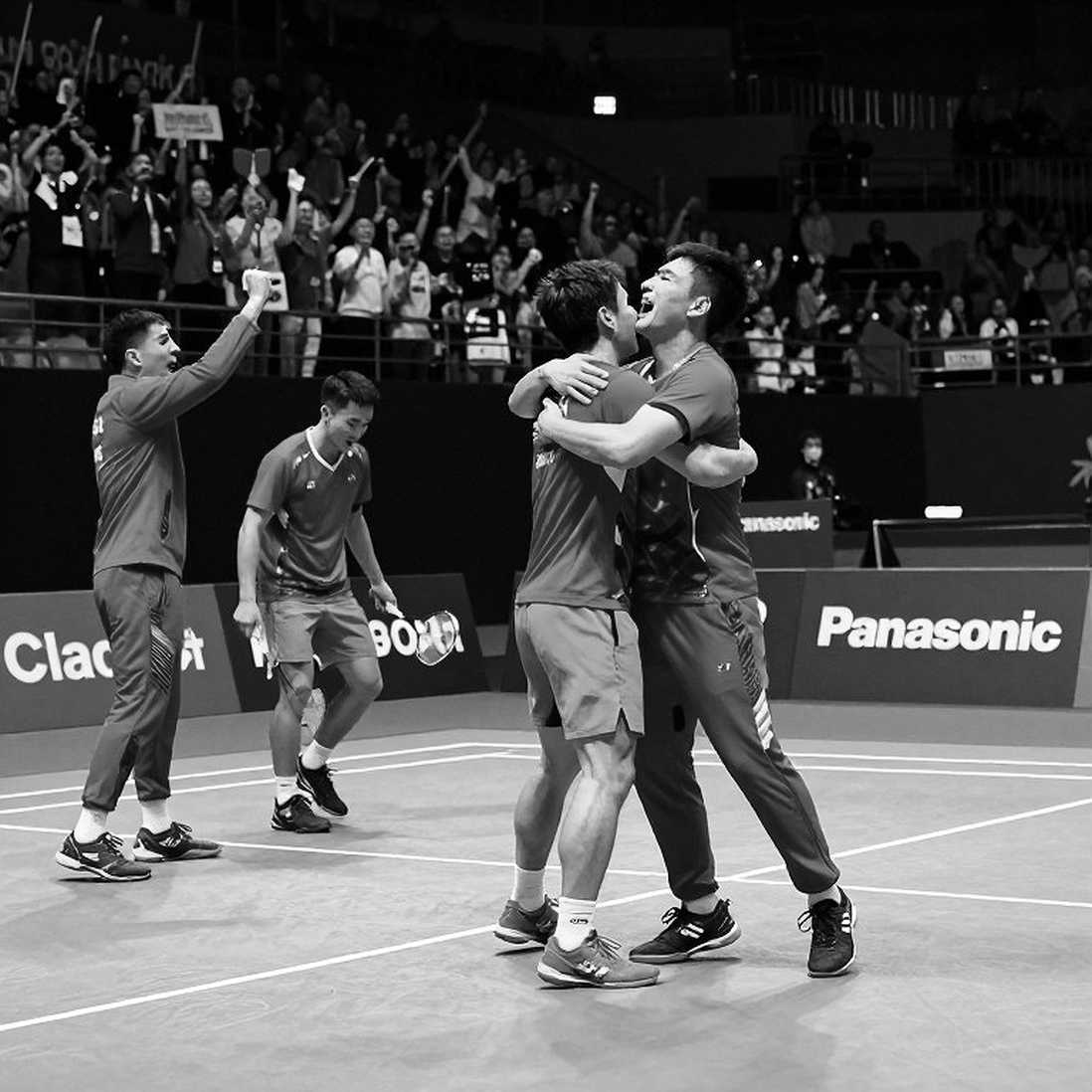
The second game is the hinge. Twenty-four minutes, 19-21. That is a deuce-adjacent game. Where points per game are finite and every turning point carries enormous weight, losing one that way is not merely 1-0 becoming 1-1 — it rewires the mood of the decider. The pair that held an opponent to twelve points in game one became indecisive in the closing points of game two. In technical language, that is a crucial-point handling signal.
Then the decider: nineteen minutes, 14-21. Note this — the shortest game of the match was also the most lopsided. The largest points gap in the least time means one of two things: either the Thai pair were hitting consecutive winners, or the Indian pair were piling up errors fast. Which one, the data does not tell us. I want to be explicit: I have no smash speed, no unforced error rate, no net-win rate from this match. So I am concluding inside the limits of the evidence, which is the honest method.
One thing is still inferable. When an attack-first pair loses control of the attack, rallies lengthen, physical cost rises, and the back-court player runs far more. That likely began in game two and became a flood in game three.
Here is the counter-intuitive question: is 'shock upset' even the right frame? I do not think so. 'World No. 36' is a ranking construct, not proof of level. In Asian badminton — men's doubles above all — the No. 16 to No. 40 band sits pressed right against the elite. Many pairs outside Asia farm points all year on the World Tour; many Thai or Chinese Taipei pairs play four or five events a year and carry a low ranking while their real level is far higher. On paper the gap is thirty-two places. On court it is a few points.
A second counter-intuitive signal: analysts will build the story around the decider because 14-21 looks dramatic. But the match was lost in the last two points of the second game. The nineteen-minute collapse is the aftermath of a twenty-four-minute psychological blow. The shock headline looks one way; the real signal points the other.
And the most important caution: a single match cannot establish a form trend. This is a sample of one. The internal expectation of defending a title, a possible coaching reset in the post-Paris cycle, the prior head-to-head against this Thai pair — I have none of that. What I have is a well-played opening game, a lost hinge, and a broken decider. Reaching the word 'decline' from those three pieces would be overreach.
From there, a structural point emerges. India's real risk in men's doubles is not this defeat — it is reliance on a single flagship pair. Indonesia, China, Korea, Malaysia all keep multiple pairs on stage at once; when one falls, another carries. For India, Satwik-Chirag's exit closes the principal medal pathway in that event. Kapila and Crasto reaching the quarter-finals shows the mixed doubles pathway is alive, but the top seed waiting there is a ceiling test.
The empty stadium once taught me that silence has a pulse you can hear. The silence after that defeat in Aichi-Nagoya is of the same species. So the question is this: will India's badminton plan step off one pair's shoulders, or will it keep leaning on the same shoulders until the next Asian Games?
I host because the moment needs a witness, not another narrator. Today's match testifies that in Asian men's doubles, the wall between the elite and the 'low-ranked' is thinning fast. Those who plan against that wall will take the next hit.