
From 21-12 to 14-21: Satwik-Chirag's Exit and the Hidden Depth of Asian Doubles
**মূল উত্তর:** সাতউইকসাইরাজ রাঙ্কিরেড্ডি ও চিরাগ শেট্টি ২০২৬ এশিয়ান Gamesের পুরুষ ডাবলসে প্রথম রাউন্ডে থাইল্যান্ডের ৩৬ নম্বর জোড়ার কাছে ২১-১২, ১৯-২১, ১৪-২১-এ হেরে বিদায় নেন। ম্যাচের মোড় ঘোরে দ্বিতীয় গেমে; তৃতীয় গেমে ভারতীয় জোড়ার প্রতিরোধ ভেঙে পড়ে। **মূল তথ্য:** - ম্যাচের মোট সময় ৬৮ মিনিট; গেমগুলো ছিল ২০, ২৪ ও ১৯ মিনিটের। - থাই জোড়া পাক্কাপান তিরারাতসাকুল ও পিরাতচাই সুকফুন বিশ্ব র্যাঙ্কিংয়ে ৩৬ নম্বরে ছিলেন। - সাতউইক-চিরাগ ছিলেন ইভেন্টের চতুর্থ বীজ এবং ডিফেন্ডিং চ্যাম্পিয়ন। - একই দিনে মিশ্র ডাবলসে ধ্রুব কপিলা ও তানিশা ক্রাস্তো কোয়ার্টার ফাইনালে ওঠেন। - এশিয়ান Gamesের একক-বিদায় Formatে দ্বিতীয় সুযোগ নেই; পয়েন্ট-লেডার সুরক্ষাও নেই। **সূত্র:** Khel Now প্রতিবেদন, এশিয়ান Games ২০২৬ Badminton কাভারেজ, ২৫ সেপ্টেম্বর ২০২৬। ভিত্তি-উপাদানে র্যালি-দৈর্ঘ্য, স্ট্রোক-ধরন ও ত্রুটির তথ্য অনুপস্থিত, তাই কৌশলগত প্রক্রিয়ার ব্যাখ্যা অনুমান হিসেবে চিহ্নিত। **সম্ভাব্য পরের প্রশ্ন:** প্রশ্ন: চতুর্থ বীজ হয়েও প্রথম রাউন্ডে হার কীভাবে সম্ভব হলো? উত্তর: এশীয় পুরুষ ডাবলসে ১৬ থেকে ৪০ নম্বরের জোড়ারা নির্দিষ্ট দিনে বীজ ভাঙতে পারে, আর দ্রুত শাটলে সেই সম্ভাবনা বাড়ে। প্রশ্ন: এই হারে ভারতের পদক-সম্ভাবনা কি পুরোপুরি শেষ? উত্তর: পুরুষ ডাবলসের মূল পথ বন্ধ হয়েছে, তবে মিশ্র ডাবলসে কপিলা-ক্রাস্তোর কোয়ার্টার ফাইনালে ওঠা ভারতের ক্যাম্পেইনকে পুরোপুরি ব্যর্থ বলার সুযোগ দেয় না। প্রশ্ন: থাইল্যান্ডের জন্য এই জয়ের অর্থ কী? উত্তর: ডাবলস-পাইপলাইনে থাইল্যান্ডের ধারাবাহিক ঊর্ধ্বগমনের সংকেত, যা র্যাঙ্কিং নম্বরের চেয়ে বেশি তাৎপর্যপূর্ণ।
Game one, twenty minutes, 21-12. Game two, twenty-four minutes, 19-21. Game three, nineteen minutes, 14-21.
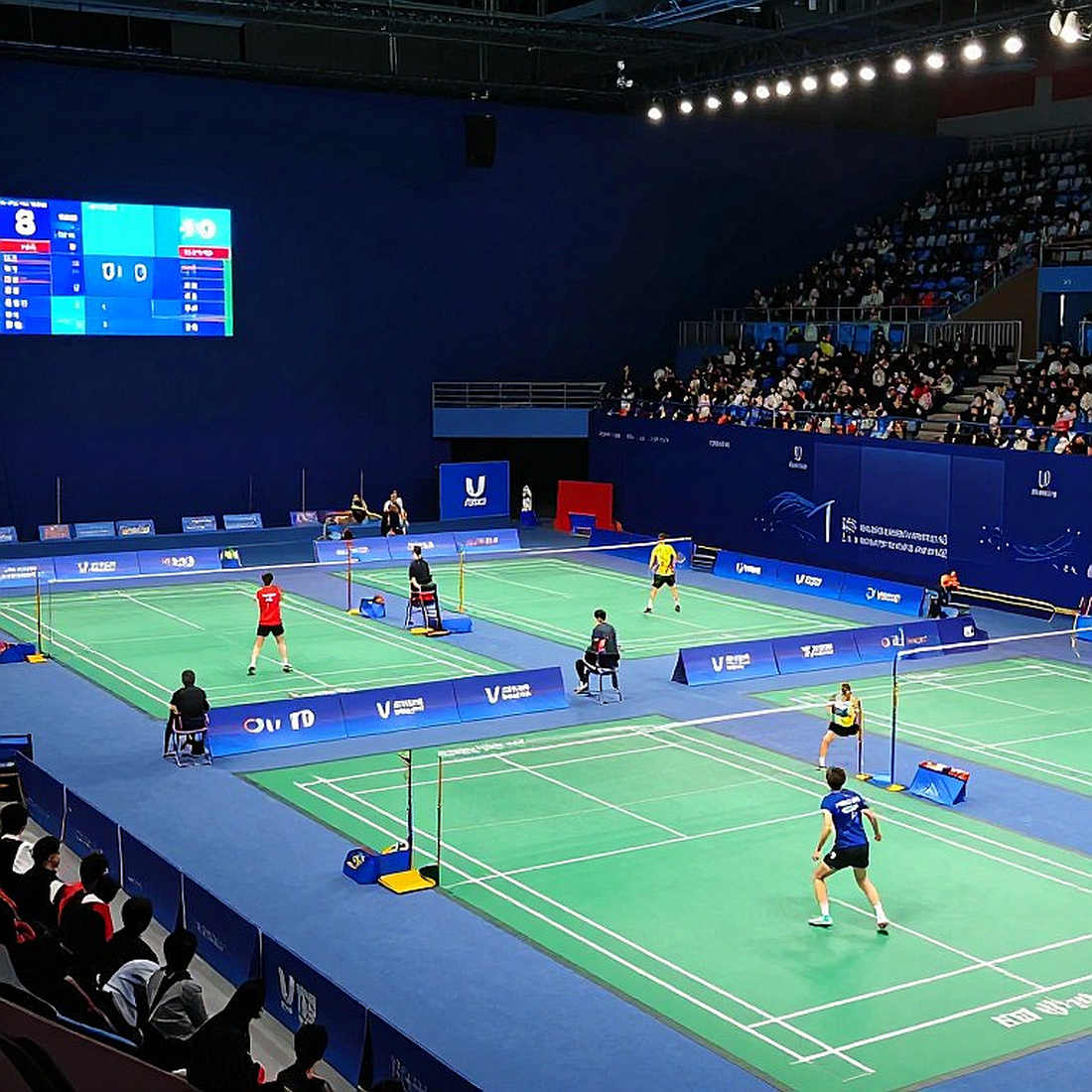
At the badminton hall in Aichi-Nagoya, the fourth-seeded men's doubles pair of Satwiksairaj Rankireddy and Chirag Shetty went out in the first round of the Asian Games 2026, beaten by a Thai pair ranked 36th in the world. The evening bulletins used the word shock, and the word is not wrong. My attention, though, went to the sequence of durations inside the scoreline. The shortest game of the three was also the most one-sided. A pair that wins an opener 21-12 should not be closing out its tournament in nineteen minutes at a seven-point margin.
When I began streaming women's football from Rangpur in 2026, the first lesson was that a match does not end on the scoreboard. That stream was less a broadcast than a doorway; through it you could see when a player's morning began, who she spoke to at night, whose money bought the shuttle. The same doorway is needed for this match.
Context first, because the court is the last place the story starts
The Asian Games is a quadrennial continental event, badminton conducted under the Olympic Council of Asia's organisation and the technical laws of the sport's world federation. It is not a stop on the world tour. The rewards here are medals and national standing; there is no points-ladder insurance. Single elimination means one bad afternoon closes the entire cycle.
Satwik and Chirag were the defending champions. They were among India's headline medal contenders. The match fell on Day Six, 25 September 2026. India's day was not uniformly bad: in mixed doubles, Dhruv Kapila and Tanisha Crasto beat a Malaysian pair to reach the quarterfinals, where a Chinese pair described in the report as world No. 1 awaited. I have doubts about that name's spelling and ranking position, and I am stating the doubt rather than papering over it.
There is a second layer the broadcast never shows. Asian doubles still runs on state and corporate sparring cultures, and the depth of those sparring lines in China, Korea, Japan, Indonesia and Malaysia is built generation upon generation. India leans harder on the individual quality of specific pairs. That is a structural question, not the meaning of a single match, but a single match drags that structure into view.
Reading the scoreline in three layers
Layer one: the grammar of time. 21-12 in twenty minutes means the rallies were short. A pair that wins an opener that quickly is usually holding first-strike dominance, serving and receiving aggressively, forcing the opponent to lift. Then 19-21 in twenty-four minutes: the clock lengthens, and in badminton a lengthening clock usually means the shot pattern has changed. Then 14-21 in nineteen minutes: the pace returns, but one-way.
Layer two: 19-21 is the hinge. When a pair that dominated the opener loses a deuce-adjacent game and then collapses by seven points in the decider, the likeliest explanation is not a physical fade but decisiveness at the crucial points. The last few points of game two decided the third game. This is a failure of reset, not a failure of conditioning.
Layer three: power against tempo, a hypothesis with limits. The Thai pair's identity is flat exchange, mid-court continuity and quick feet. India's identity is power: Satwik's rear-court smash, Chirag's front-court interception. The most plausible mechanism is that Thailand turned the match into a speed contest rather than a power contest, leaving fewer opportunities for the big smash to land. I cannot confirm this. The source material offers no rally-length, shot-type, net-win-rate or error data. Disciplined doubt says: mark the limit, do not fill the gap with certainty.
Form, samples, and what one match cannot prove
After a first-round exit the easiest line is form collapse. The hardest line is admitting that one match is not a trend. I do not have the pair's full 2026 results, the head-to-head against the Thai pair, or their schedule density. With that gap acknowledged, a provisional claim stands clearly: a loss to No. 36 alone does not prove decline, but losing the ability to control the tempo of a match inside a single afternoon is a real signal worth watching. I state the uncertainty once and move.
Based on my years of watching matches, doubles decline rarely begins with lost smash speed; it begins with lost decision speed. Who steps in first, who waits for the counter, who takes the risk on the third shot. Satwik and Chirag took the risk in game one, appeared to reduce it in game two, and by game three were taking no risk at all. When a gifted pair stops risking, it does not lose the lead; it loses the imagination.
Seeding, draws, and the shape of the competition
Being the fourth seed buys draw protection, and on the first round that protection is only paper. At a Games the margin for error is thin and the next chance is four years away. A first-round loss on the world tour is a points event; at a Games it is a historical event. Coaches and federations must absorb that distinction more than players do.
At tournament level, one more thing is clear: the opponent's No. 36 ranking serves the headline, not the court. In Asian men's doubles, pairs in the 16-to-40 band can be the most dangerous on a given day, especially when the shuttle is quick and the hall rewards speed over experience. In this event, low seed does not mean low threat. Thailand's steady doubles pipeline is further evidence.
India's structural question: one flag-bearer
India's risk in men's doubles is concentration. When the flagship pair falls, the primary medal pathway in that event closes. Kapila and Crasto reaching the mixed doubles quarterfinals shows the other pathways are alive, but that pathway now faces a ceiling test against the top seed. Read together, the structural question is whether India is moving from reliance on individual pairs towards sparring lines, analysis units and a three- or four-pair pipeline, or whether each cycle defends a single flag-bearer.
The answer does not live in a scoreline; it lives in the training hall. In 2026, when I first streamed from Rangpur, I was less struck by the score than by one sentence: a player trained after harvesting rice. Badminton makes that labour layer starker because the number of shuttles destroyed each month is itself an economic burden. Court time, sparring partners, visas, physios, foreign coaching clinics: in a structure like India's, each variable lands on a family and a sponsor. In the Bangladesh context I have seen that calculation turn crueller for women players, where permission for gym time and court booking waits on the consent of many people. The principle is the same: the better the flag-bearer, the less visible the missing structure, until the day she loses in the first round.
Coaching and support: the information I was not given
No coach is named in the material, no stability record, no staffing detail. I will not invent any. What can be said is that after a defending champion's first-round exit, any professional set-up runs a post-mortem, and it usually asks three questions: what the tactical instruction was at the end of game two, whether an alternative plan existed against flat-exchange pressure, and what the courtside staff proposed during the match. I was not given those answers, so I only offer this: in a match where the opponent changes plan after game one and yours does not, the path by which the result slips from your hands is very narrow.

The rules and institutional dimension is largely untriggered. No service dispute, no appeal, no disciplinary allegation appears. In football, VAR moved controversy from the pitch to the review room rather than removing it; badminton has its own history of fine service and flight calls, and complaints at major events are not new. Whether anything of that kind occurred in Aichi-Nagoya cannot be verified from this basis.
Contrarian view: the word shock hides the actual news
Calling a first-round exit a shock assumes that a 32-place ranking gap translates automatically onto the court. In Asian doubles it does not. My argument is not anti-ranking; it is against treating ranking as the only line. Men's doubles is the least predictable of badminton's events. Pairs outside the top five have not merely closed the gap; their attacking and defensive grammar is often more modern, because it is designed to keep every rally alive.
Second, commercial value and athletic value are not the same. Most of the headlines after this defeat will be filed under medal disappointment. What actually happened was a tempo-control match in which tactical adaptation was decisive. The news from the club level, where talent is built, has less commercial pull and therefore goes unwritten. That is the real gap: we measure surprise, not process.
Third, the venue-level asymmetry matters. The Indian pair was built in an individual-federation model; the opponent is a product of Thailand's organisational pipeline. Reading this match purely as personal failure loses a bigger fact: Asia's second tier is not just following, it is adapting. Track how evenly that adaptation spreads, and future shocks become forecastable.
Takeaway
The exit is not an ending but an early signal: in Asian doubles the second tier is no longer only an opponent, it is educated. In a two-year cycle the Games are a stage where medals and prestige arrive together, and where there is no second chance. The question is not whether this pair returns; top pairs return. The question is whether India and its rivals invest in shuttle costs, court time and sparring lines over the next four years. When that happens, No. 36 will not be a shock.
Historians call a buried archive back into voice. Badminton's hard questions need the same treatment. And where does that work begin? Exactly where mine did: through a doorway.